
Read the starting window.
The prepared position is part of the question. Trace which symbol would enter or leave before selecting a control.
QIRAVENOLUM / A TABLETOP PUZZLE WORKSHOP
Play six free, deterministic puzzles here, then try the six-turn practice or print a paper prototype. The Coinstrike-inspired artwork accompanies our own manual symbol-matching rules. Scores are points with no cash value.
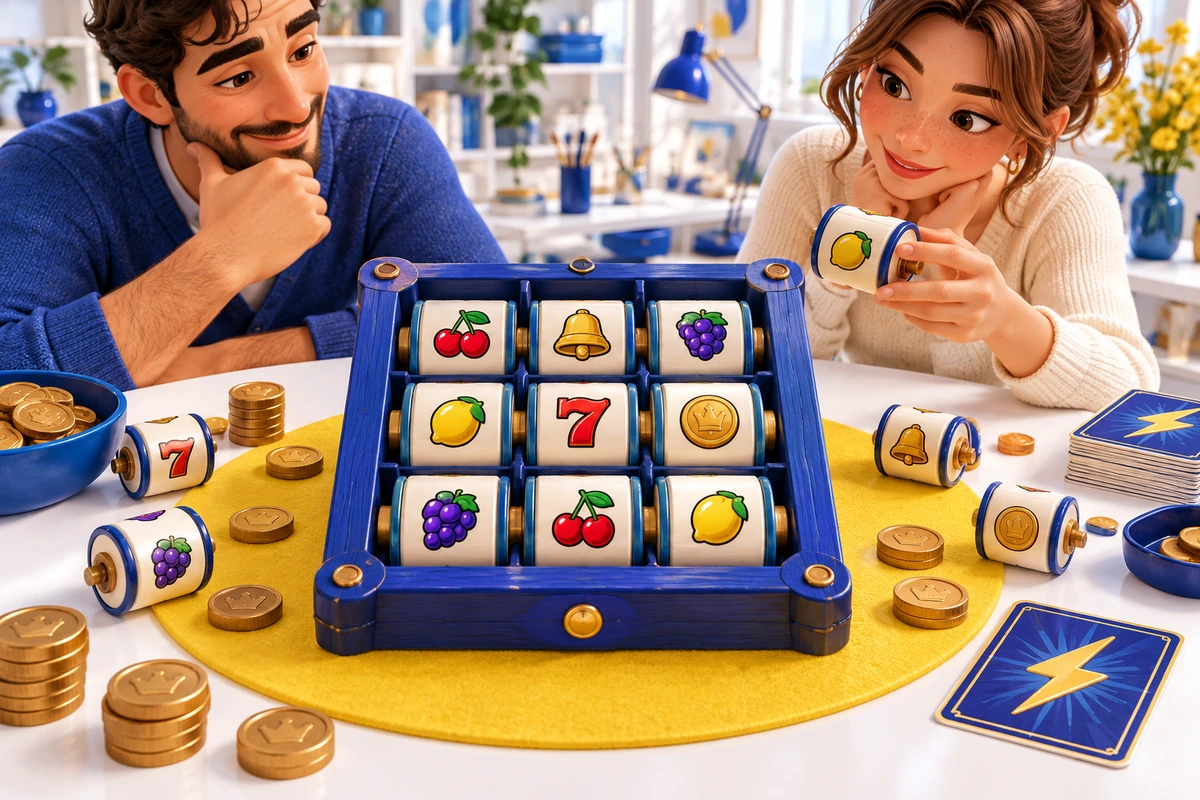
The puzzles and six-turn practice run on this website. The printable kit contains reel strips, a viewing frame, rules and score sheets for a paper version. This independent prototype does not reproduce the commercial Coinstrike game.
Open the printable kitPICK AN OBJECTIVE
Start anywhere. Every challenge returns to a fixed position, so a retry lets you investigate your reasoning instead of receiving a random new board.
PLAY HERE / NO ACCOUNT
Choose one of the six positions, shift a column once and select a route. The checker explains whether that move meets the target. No purchase or onward visit is needed.
Read the challenge before moving.
A MECHANISM YOU CAN FOLLOW
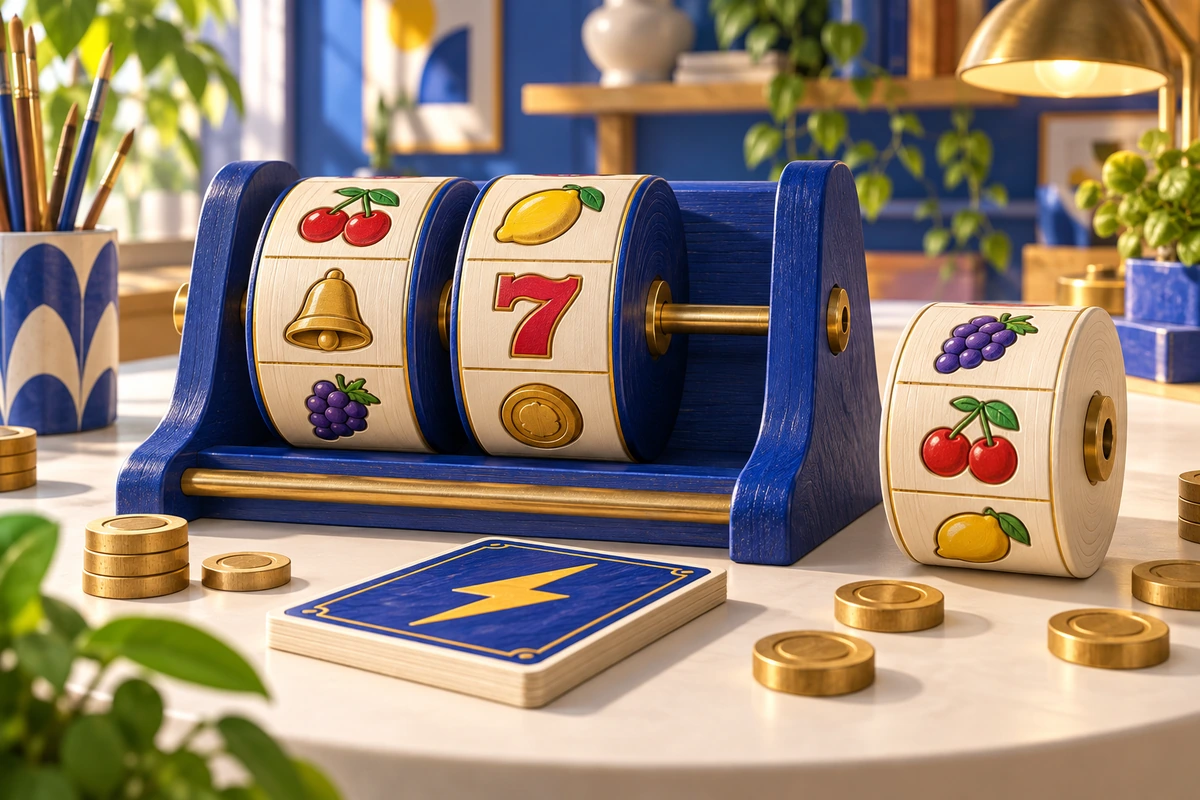
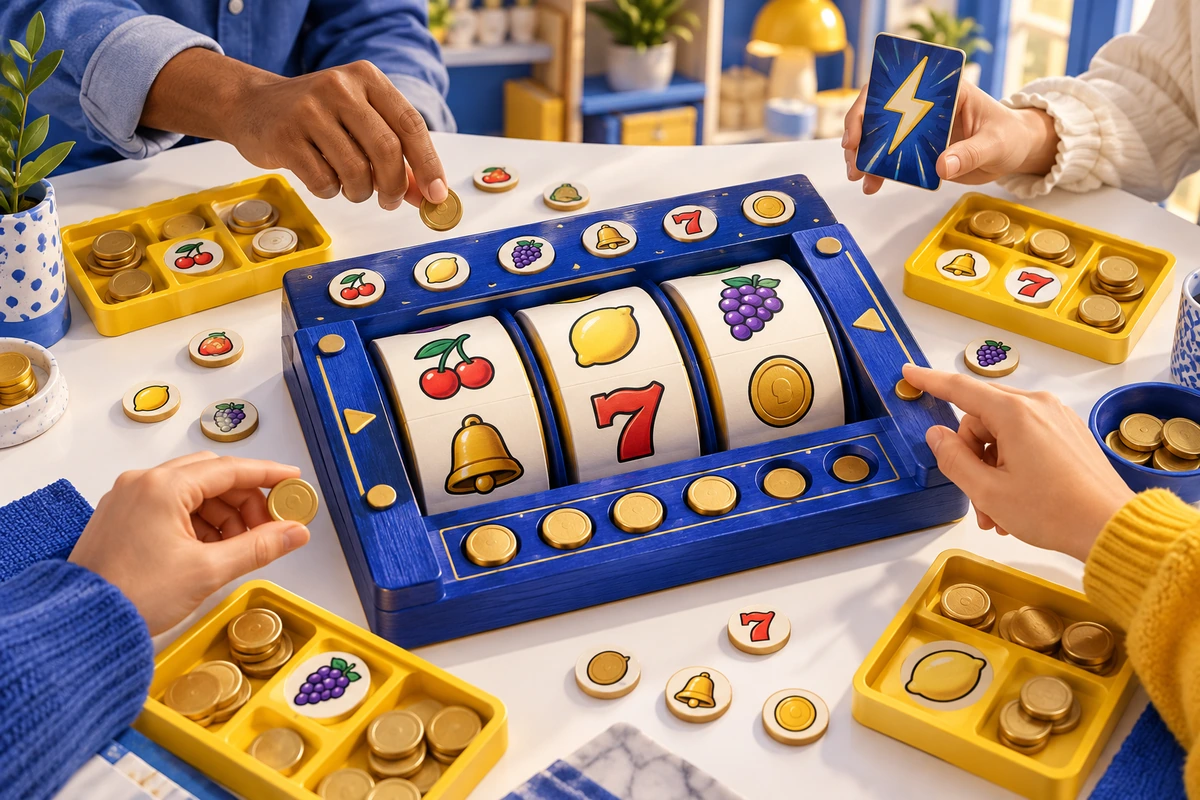
Each vertical strip repeats Cherries, Lemon, Grapes, Bell, Seven and Coin in that order. The rack reveals three consecutive symbols per column. Up advances the loop by one position; down brings the preceding symbol into view.
The prepared position is part of the question. Trace which symbol would enter or leave before selecting a control.
Move one column once. The other strips remain fixed and available for a possible match.
A row or diagonal may now satisfy the target. Choose the route you intend to count.
THE PRACTICE ROOM IS OPEN
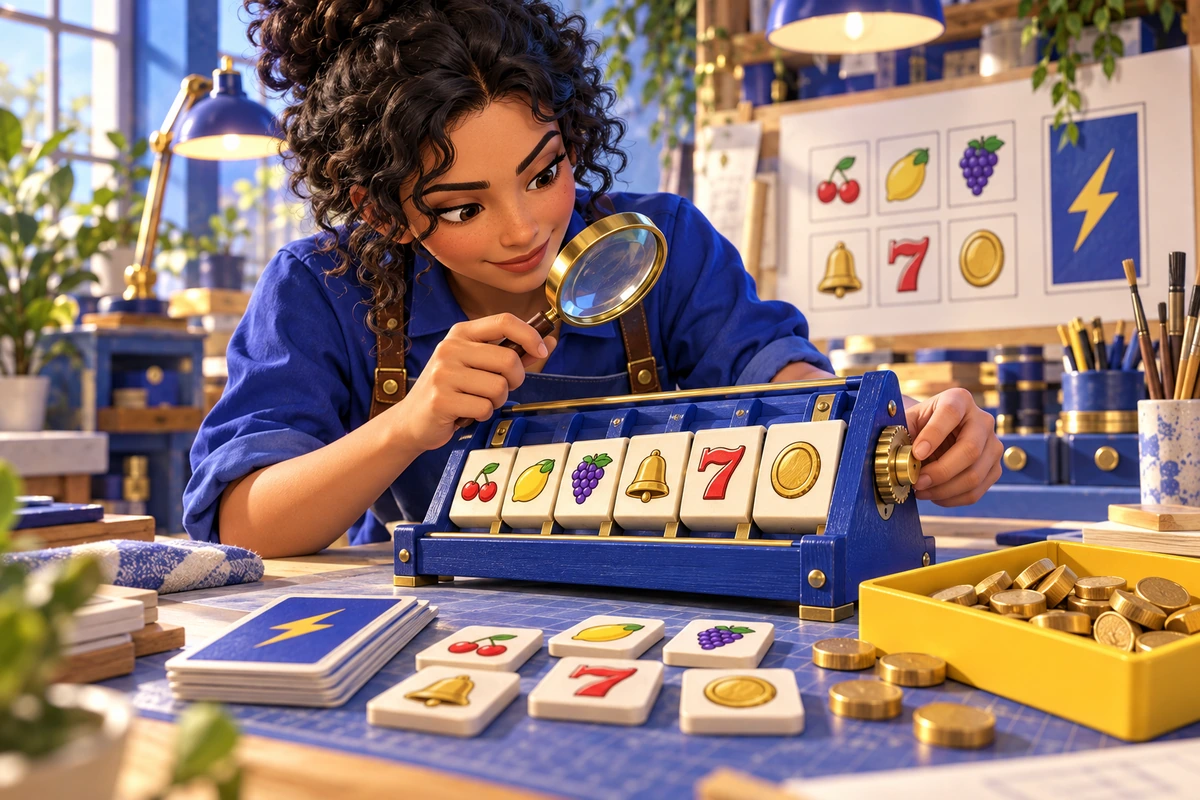
The puzzle room checks your selected route against a stated identity and minimum point award. Some examples permit Strike; others ask you to solve the visible board without it. A hint gives one verified solution, and retry restores the exact starting position.
These are isolated teaching turns. Solving six examples does not produce a six-round match score, and a solved marker never adds point coins to a physical collection.
THREE THINGS THE RESULT TELLS YOU
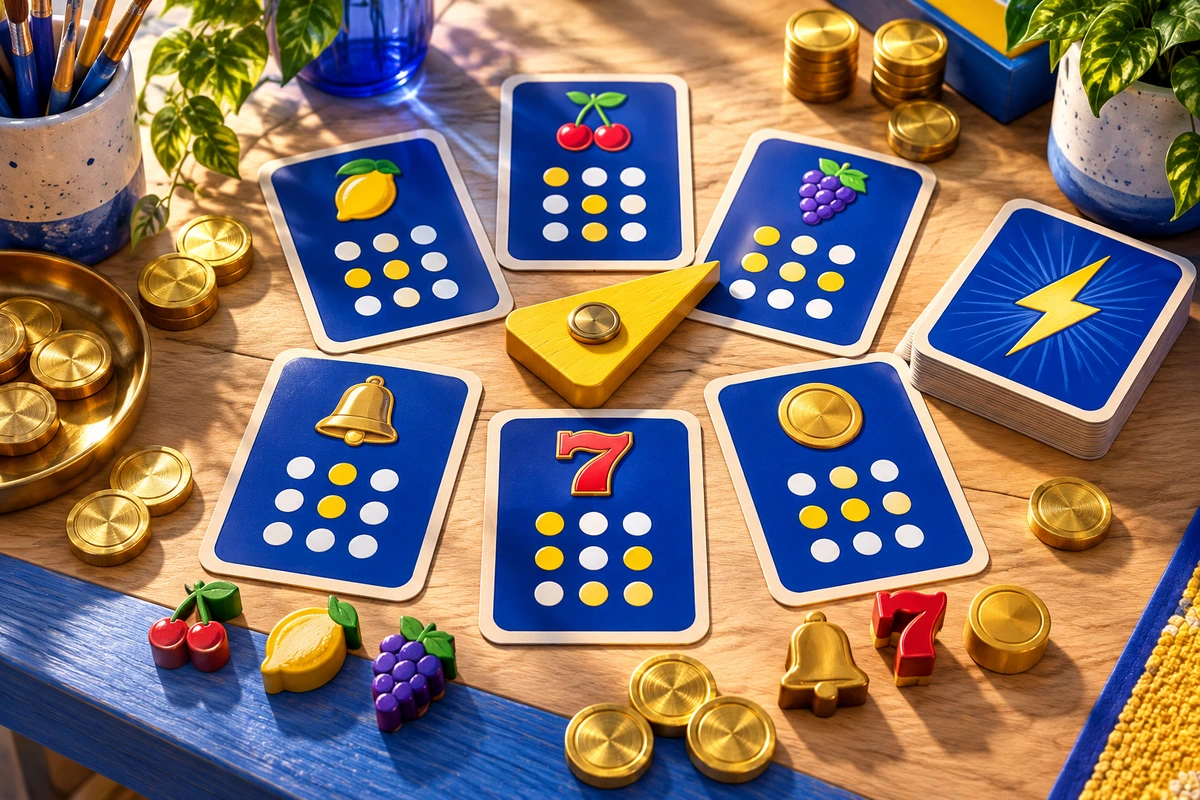
The chosen symbols answer different questions: how many counters, which identity, and what that means at the end.
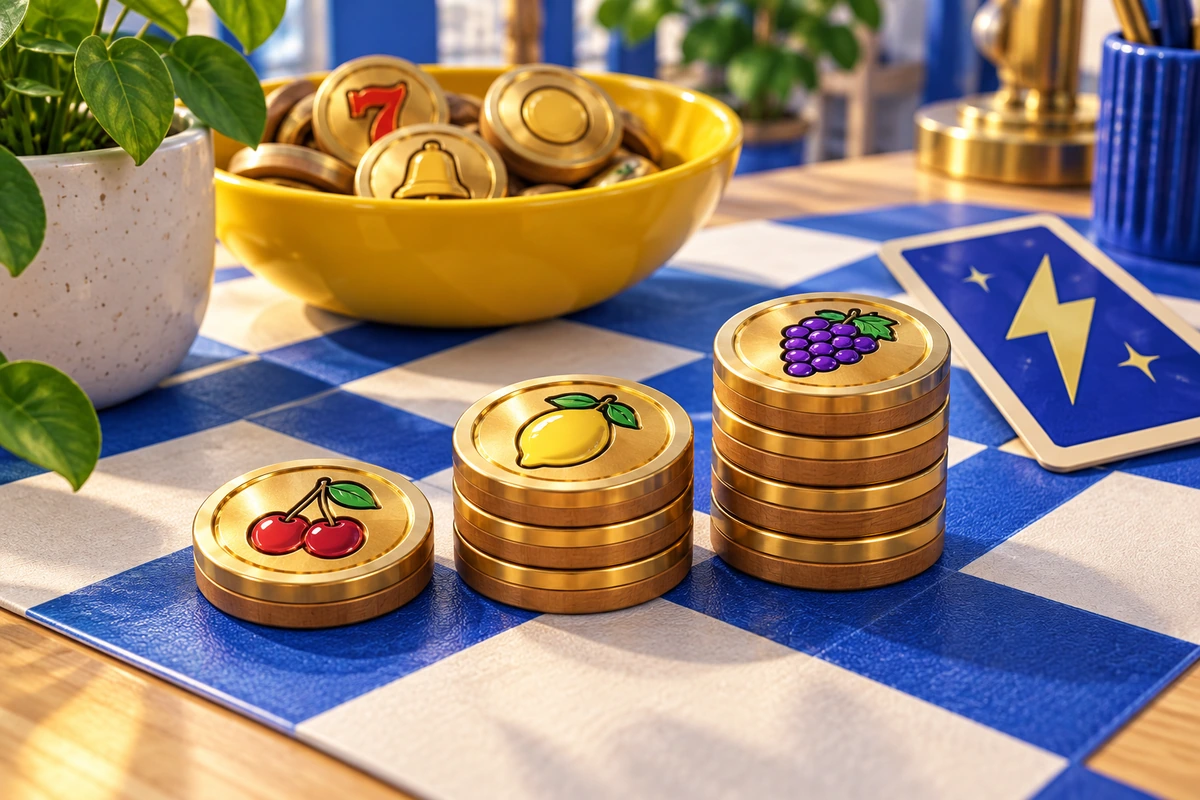
Three different symbols earn one point counter. A matching pair earns two, and three matching symbols earn four. A Coin match follows exactly the same values as a fruit or Bell match.
Check the award reference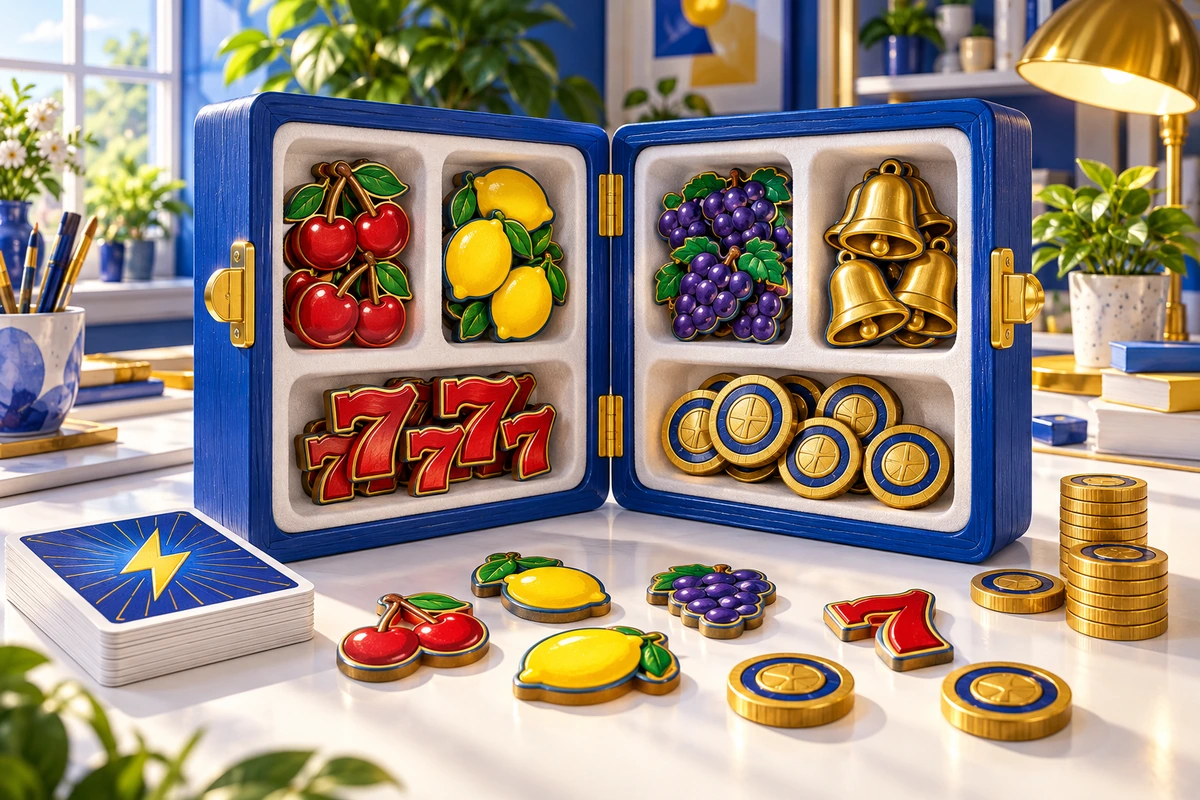
A pair or triple also supplies a collection stamp of the matched type. Record one stamp for the route, regardless of whether it contains two or three matching symbols.
Browse the six identities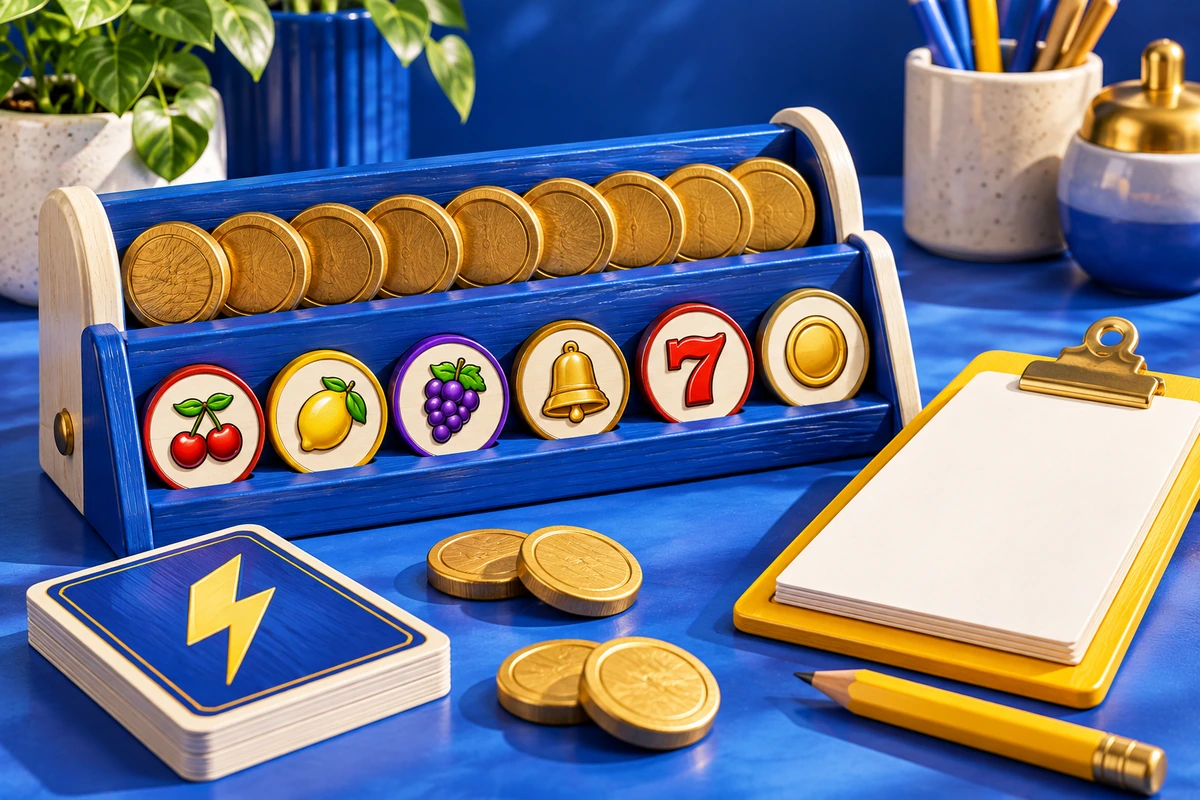
At a real game’s finish, add two points per distinct collected identity. Add one more if the player kept their Strike. Counters still contribute their ordinary face count.
Use the closing tallyA QUESTION BEFORE THE WILDCARD
Strike changes one symbol for the selected count by copying an identity already visible on that route. It never rotates a second reel or alters the physical position passed onwards.
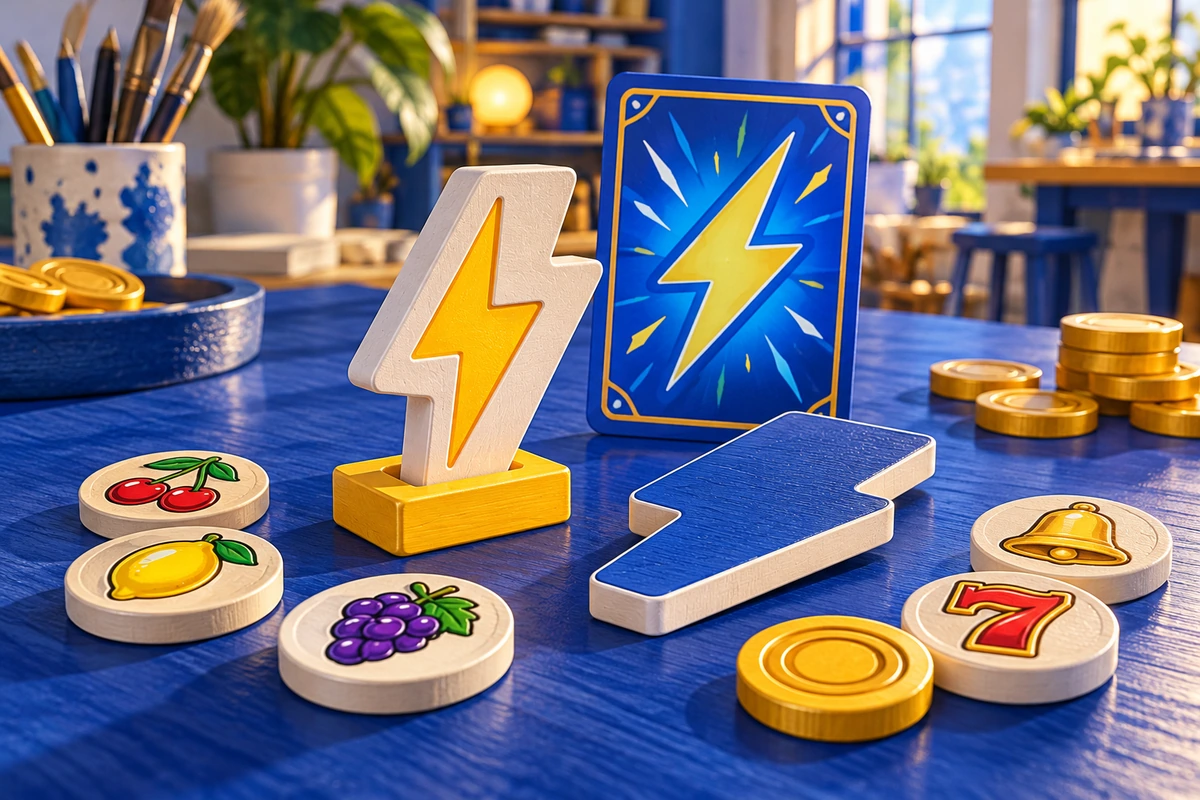
FROM EXAMPLE TO TABLE
Set out a personal tray and Strike card for each player. Keep the shared counter supply apart, and choose a starting seat before the first full round.
Arrange the physical opening
LET THE EXPLANATION TRAVEL
Invite a player to name the shifted column and selected three symbols. The explanation makes a successful turn repeatable and helps a new player notice the same relationship later.
Run a small group sessionChoose any numbered example from the launcher or puzzle-room tabs. Switching examples resets the attempt you are inspecting, while solved markers remain visible until the page is reloaded.
A hint describes one checked solution. Other legal choices can also pass if they reach the displayed identity and minimum award. The checker evaluates your result rather than requiring the hinted sequence.
The challenge may exclude the card, you may not have shifted a reel yet, or the selected route may already be a natural triple. The objective panel and result text explain the current situation.
The written guides describe a separate complete physical game for two to four players: six turns each, personal collections, one Strike per player and a final count. Prepared examples are an optional teaching tool.
No money enters the rules. The counters measure tabletop points, and the website has no deposits, paid spins or cash rewards. The imagery develops a coin-and-reel theme for a manually operated game concept.
Puzzle attempts and solved markers are temporary page state. Choosing to remember the notice stores only that preference in this browser. The privacy and browser-storage pages describe the limited data handling.